



Management for Creatives: How to lead teams and projects without losing your creative edge
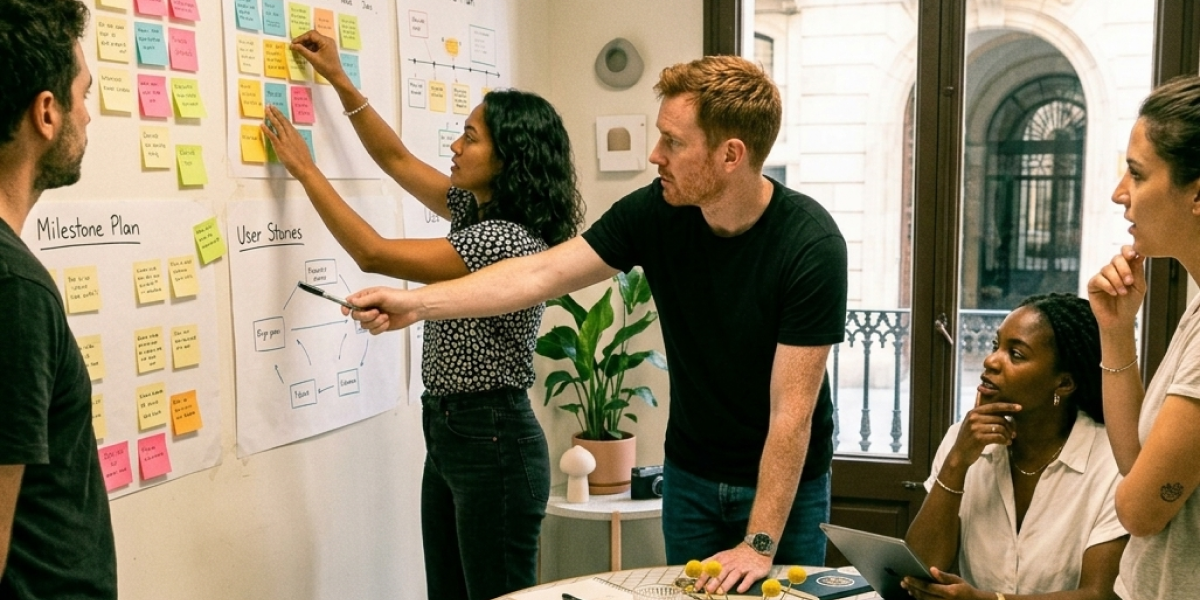
There comes a time in every designer's, art director's, or visual creative's career when the fundamental question shifts. It's no longer "How do I refine my technique?" but rather "How do I help my team grow?", "How do I make this studio profitable?", or "How do I make decisions someone else used to make for me?". It is a leap that many make without preparation—promoted simply because they excelled at their core craft—only to discover (sometimes painfully) that being a great designer doesn't automatically prepare you to lead effectively.
• LABASAD has established Management as a dedicated study area in Spanish within its academic offerings, reflecting a clear industry need: creatives increasingly require these competencies to avoid career stagnation.
• Management for creatives doesn’t mean stepping away from design or art direction to become a “manager”; it means adding a layer of core competencies (processes, people, business) on top of your existing creative vision.
• There are two distinct educational paths: Operational Management (DesignOps, day-to-day team leadership, technology) and Strategic Management (business vision, profitability, agency/studio growth).
• The main point of friction when transitioning from creative to leader is professional identity, not technical skill: shift from measuring your worth by your individual output to measuring it by what your team accomplishes.
• Artificial Intelligence acts as an accelerator for management, not just creation—process automation, synthetic user research, and documentation are now part of a creative leader’s daily workflow.
This gap is one of the most common blind spots in the creative industry. Professionals spend years training in tools, composition, visual narrative, and trends, but rarely learn about people management, processes, business, or strategic decision-making. The result is predictable: studios burdened with great creative talent but chaotic workflows, art directors burned out from managing team conflicts without the right toolset, or brilliant freelancers who struggle to scale their business beyond their personal bandwidth.
At LABASAD, we’ve seen this demand grow so steadily (in the Spanish market above all) that we have built Management for Creatives into a dedicated discipline, featuring two distinct Master’s programs tailored to different stages of this transition: one operational, focused on leading teams and projects using technology and AI, and another strategic, focused on sustainably running a creative business. In this guide, we explore what each path entails, the real competencies you need to build, and how to identify where you stand in your professional journey.
• Continuing to measure your value by individual output. When you lead a team, your contribution is no longer measured by what you personally design, but by what your team achieves because of your guidance. Failing to shift this mindset leads directly to frustration.
• Avoiding uncomfortable conversations. Delivering hard feedback, resolving team conflicts, or communicating unpopular decisions are specific skills that require targeted training.
• Lacking documented processes. Assuming “everyone knows how we do things” works in tiny teams, but it breaks down as soon as the studio or agency grows.
• Confusing management with control. Micromanaging every minor creative decision stifles autonomy and motivation, driving top talent away from creative studios.
• Ignoring the business side. Many creative directors with extensive technical experience have never managed a budget, P&L statement, or commercial negotiation, severely capping their career growth.
The creative industry has undergone structural shifts in recent years. Studios and agencies operate with greater agility, cross-disciplinary teams, and accelerated production timelines driven by technology—especially AI. This has a direct consequence: execution is no longer the primary bottleneck; management is. A team generating rapid work with AI tools without clear coordination, structured processes, and effective leadership doesn’t perform better; it simply accelerates chaos.
This issue is compounded by a classic industry pattern: top-performing creatives are routinely promoted into managerial roles without formal training. This classic “Peter Principle” in the creative space means the best designer becomes the art director based on craft alone rather than leadership capability. Without structured support, the outcome is often an insecure leader and a team with unclear processes.
Snippet: In the modern creative sector, the biggest career risk is no longer a lack of design skills—it’s the inability to effectively lead those who design.

Whether your goal is to lead an internal team, launch your own studio, or step up within an agency, there is a core set of recurring competencies:
Leadership and People Management
Coordinate creative talent, identify individual strengths, foster motivation, and navigate team conflict using trust and influence rather than rigid hierarchy.
Process and Project Management
Build clear workflows, document operations, track milestones, and automate repetitive tasks so the team can focus on creative output. This discipline has a specific name in the sector: DesignOps—a core component of the Onlive classes across our new Management Master’s programs.
Strategic Communication
Pitch and defend creative concepts to clients or executive boards, negotiate terms effectively, and deliver tough decisions with clarity and empathy.
Business Acumen
Understand how to build a profitable creative business model: pricing models, client acquisition, financial control, and sustainable scaling.
LABASAD Tip: “The most common mistake we see in new creative leaders is treating people management as a secondary ‘soft skill’ compared to technical craft. In reality, it is the single competency that determines whether a talented team produces its best work or falls far short of its potential.”— Management Faculty, LABASAD
This is the most critical distinction in this article, and the key to choosing the right educational path.
The Operational Profile: DesignOps and AI Team Management
If your day-to-day challenge involves coordinating a creative team, optimizing workflows, integrating AI tools into daily processes (research, documentation, automation), and serving as the digital transformation lead in your organization, your profile is DesignOps / Operational Management. This role stays closer to daily execution and coordination than to core business decision-making.
The Strategic Profile: Creative Business Management & Leadership
If your challenge is scaling a studio, an agency, or your personal freelance brand—defining business strategy, acquiring and retaining clients, managing profitability, leading high-performance teams, and making sound business decisions—your profile is Strategic Management. Here, the focus is on the long-term sustainability and growth of the creative business as a whole, not just project or team coordination.
The Practical Rule of Thumb
Ask yourself what challenge keeps you up at night: if it is “How do I get my team to work in a more organized, efficient way?”, your path is operational. If it is “How do I grow this business profitably and sustainably?”, your path is strategic. Over time, as responsibilities expand, many professionals end up needing both—first operational, then strategic.
Snippet: Operational management optimizes how your team works today; strategic direction determines where your business grows tomorrow. They aren’t mutually exclusive—they are developmental stages.
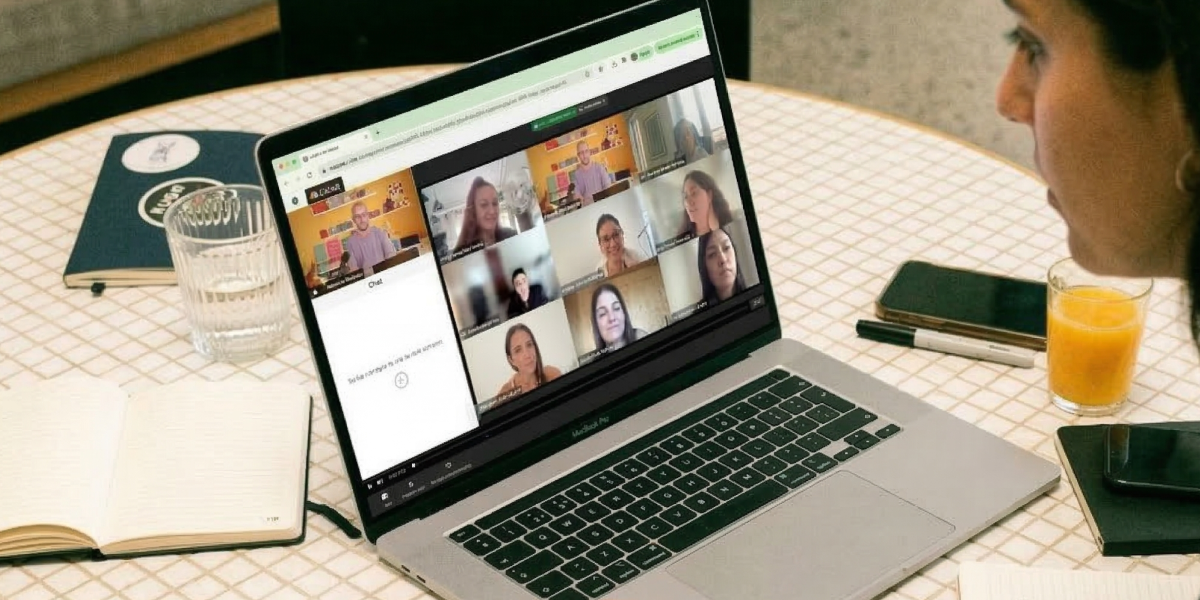
Artificial Intelligence has evolved from a tool for creative output into an essential management tool. Here is how daily creative leadership is changing:
• Automation of Operational Tasks: No-code platforms like n8n, Make, or Zapier allow leaders to build automated bots and workflows that eliminate repetitive admin work—such as status reporting, project tracking, and document management.
• Accelerated Research Without Loss of Depth: Using synthetic user models and AI-assisted research tools enables teams to validate design and product decisions in a fraction of the time required by traditional methods.
• Streamlined Remote Collaboration: AI tools applied to briefing documentation, meeting minutes, and remote workshops improve collaboration quality in distributed teams.
• Data-Informed Decision Making: A strong creative leader uses AI to synthesize complex information—project metrics, client feedback, and team workload—to make better-informed choices, without replacing human judgment in the final call.
This pattern connects directly to how AI is transforming corporate visual identity: if you’re interested in an applied case, at LABASAD we analyzed in detail how Google Pomelli combines brand identity and AI automation—a clear example of this logic applied to branding workflows.
LABASAD Tip: “You don’t need to know how to code to automate processes today. With no-code tools, an art director or creative project manager can build custom management bots independently. It is one of the most in-demand skills in the job market right now.”— Alejandro Masferrer, Director of the Online Master in Creative Team and Project Management with AI, LABASAD
There is no single magic formula, but several clear indicators signal it’s time for formal management training:
1. You’re already leading informally, even without the title: If the team comes to you to resolve questions, coordinate tasks, or mediate conflicts, you are taking on management responsibilities without formal training or official recognition.
2. Disorganization frustrates you more than skill gaps: When your main energy drain isn’t work quality, but chaotic processes, poor communication, or bad deadlines, you need management tools, not technical training.
3. You want to grow, but can’t scale without managing people: If your current career ceiling requires coordinating more talent or resources, postponing management training only delays your growth.
4. You have entrepreneurial ambitions: If your medium-term goal is to launch a studio, scale your freelance brand, or lead a department, strategic business training is non-negotiable.
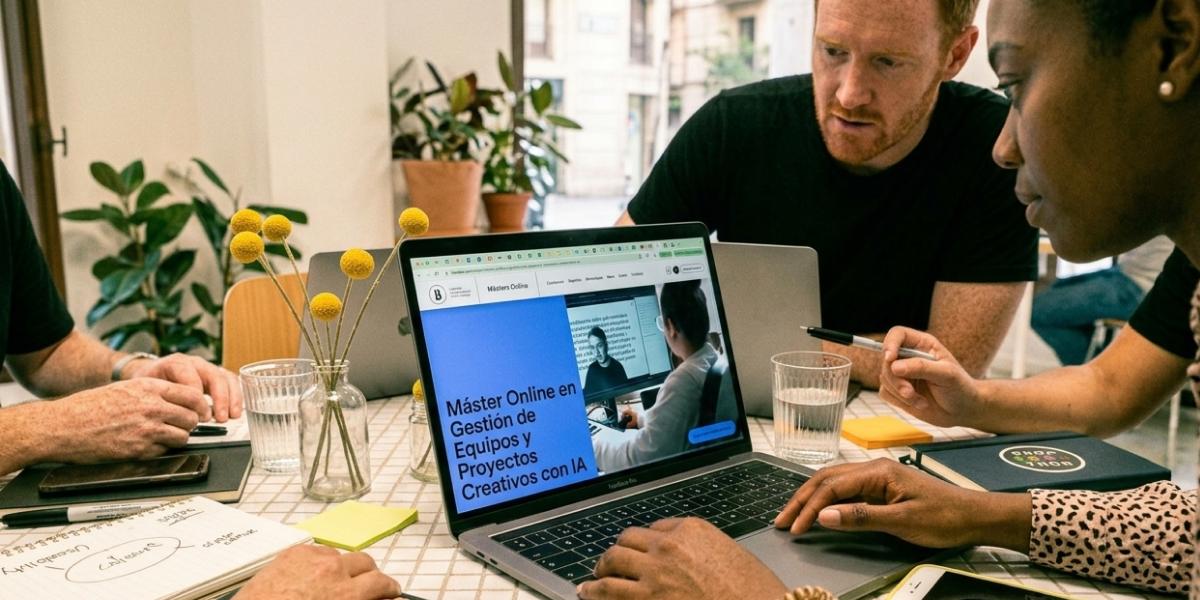
Unlike other design disciplines, management capability is demonstrated through documented case studies rather than visual assets. Apply this structure when building your personal brand or executive portfolio:
• Context: Describe the team, project, or business you managed, and the initial baseline (disorganized team, stagnant business, inefficient process).
• Challenge: Identify the specific management problem you had to solve: turnover, lack of profitability, chaotic workflows, operational scaling.
• Process: Document the decisions you made: framework redesigns, tools implemented, and how you led the team through change.
• System: Explain how your intervention translated into a repeatable system—a management playbook, documented workflow, or team structure—that runs independently.
• Impact: Show measurable results whenever possible: improved delivery times, reduced turnover, revenue growth, team satisfaction metrics.
• Key Learnings: Conclude with an honest reflection on what worked, what didn’t, and what you would do differently. In management, self-awareness is valued as much as results.
Snippet: A management profile proves compelling when it demonstrates measurable impact on people and processes—not just good leadership intentions.
Do I need to stop designing to move into creative management? Not necessarily. Many management roles, such as Art Director, combine strategic oversight with hands-on creative input. It depends on the organization, but your design criteria remains an asset, not something you abandon.
Is the Online Management Master available in English? Currently, the Online Management Master is only taught in Spanish, as we’re primarily serving demand in the local market. However, if there’s enough interest from English speakers, we’ll definitely consider offering an English version in the future!
What is the difference between the Master in Creative Team and Project Management with AI and the Master in Direction and Management of Creative Industries? The first has an operational focus: DesignOps, day-to-day team leadership, technology, and AI automation. The second takes a strategic approach: business vision, client acquisition, financial management, and executive leadership. Many professionals take the operational master’s first and later move on to the strategic one.
Does AI make human management obsolete in creative teams? On the contrary: as AI accelerates output speed, human management becomes crucial to coordinate workflows, maintain quality, and prevent burnout. AI speeds up production, but it cannot replace leadership.
What career opportunities open up with creative management training? Common roles include DesignOps Manager, Creative Project Manager for digital teams, Creative Operations Manager, Account & Project Director, In-house Design & Creative Manager, Chief Creative Officer (CCO), or Creative Business Consultant, as well as launching your own studio or brand. Creative talent alone hits a ceiling.
What turns that talent into a high-performing team or a sustainable business is effective management: people, processes, and strategy. That is why LABASAD has consolidated Management as a spanish core study area, featuring two programs tailored to different stages of your professional transition.