


From Briefing to Success: How to Ask the Right Question Before Designing
Has it ever happened that a client asks for something, you begin the design process, and after several rounds of revisions you realize it wasn’t exactly what they needed? A solid creative brief can save you a lot of headaches. Find out what questions to ask before you start, and learn how to translate a client’s ideas into a meaningful design project.
Three proposals. Two rounds of changes. One meeting that ends with an “I don’t know, something’s missing”.
You’ve worked on the composition, tried different typefaces, adjusted the colours and prepared a polished presentation. But the client still isn’t convinced.
What if the problem wasn’t the design?
Sometimes, what goes wrong is something that happens much earlier: the initial conversation. That meeting where we talk about references, colours and personal tastes, but never get to discover what the project actually needs.
Because yes, designing involves testing, making mistakes, exploring and changing direction. It’s part of the process. But there’s a difference between experimenting because you’re looking for the best solution and going around in circles because no one has properly defined the problem.
This is where the creative brief comes in.
Not as a document you have to fill out before getting to work, but as a tool to understand the brief, ask the right questions and find a starting point that makes sense.
At LABASAD, we know that a great idea doesn’t always come along on the first try. But the better you understand the challenge, the more interesting the solutions you can find.
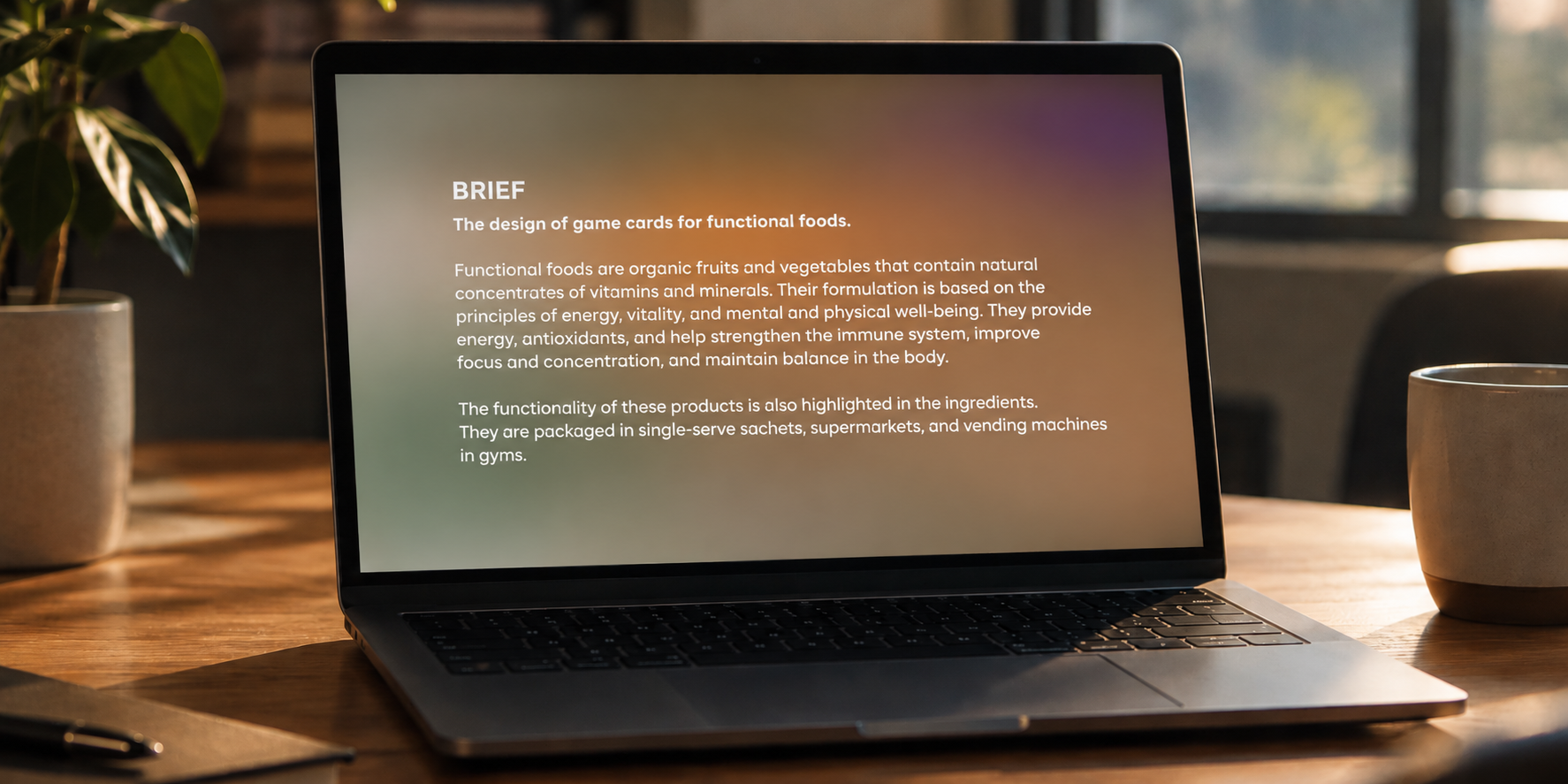
A creative brief brings together the information you need to approach a project: what the client wants to achieve, who they are targeting, what problem they are facing and what conditions you need to take into account.
So far, the definition seems straightforward.
The interesting part comes when you have to turn all that information into creative decisions.
Imagine a brand asks you to refresh its visual identity. They talk about modernity, share some Pinterest references and tell you they want to stand out from the competition.
Perfect. But what exactly does modernising mean? What isn’t working in their current identity? What makes them different? And why do they need to stand out now?
If you don’t dig deeper, you’ll end up interpreting the brief based on your own judgement. And you might get it right. Or you might develop a visually impeccable proposal that fails to address what the business actually needs.
A good brief doesn’t tell you what to design. It helps you discover what’s worth designing.
The professional association AIGA, in its resource on design, business and professional ethics, addresses issues related to the objectives, responsibilities and criteria that guide a design project.
In day-to-day practice, this translates into something very simple: making sure that you and the client understand the same thing before you start working.
And no, that doesn’t mean everything has to be settled from the very first minute. Projects evolve. Ideas change. Sometimes, you discover something during the research phase that completely changes the initial approach. The point is to have a foundation to build on, rather than starting blindly.
There are questions that seem obvious until you realise no one has asked them.
In a briefing meeting, it’s easy to end up talking about formats, colours, references and deadlines. All of that matters. But first, you need to understand what lies behind the brief.
These are the questions worth having prepared.
Let’s start with the most important one.
A client usually comes to you with a fairly specific request: they need a website, want to refresh their packaging or are looking for a new visual identity. But a request isn’t always the same as the problem.
Let’s take an example. A company asks you to redesign its website because it looks outdated. During the conversation, you discover that its main difficulty is that users don’t understand its services properly and leave the page without getting in touch.
Would you still approach the project in the same way?
Probably not. Aesthetics will still play an important role, but now you also need to think about information architecture, visual hierarchy and user experience.
That’s why, before you start looking for references, ask:
– Why do we want to do this project now?
– What isn’t working?
– What would we like to change about the current situation?
– What need lies behind this brief?
– What would happen if we did nothing?
It’s not about contradicting the client. It’s about understanding them better.
Sometimes, the solution they bring to the first meeting is the right one. Other times, you’ll discover that the real challenge lies elsewhere. And that’s where the creative work truly begins.
A project can be visually impeccable and still fail to achieve what it set out to do. A campaign can grab attention without communicating the right message. An identity can be attractive and still fail to convey the values that make a brand different.
That’s why you need to know what the client hopes to achieve.
Do they want to raise awareness? Reach a new audience? Improve brand perception? Generate more sales enquiries? Each objective opens up different creative possibilities.
Ask them:
– What should change after the project launches?
– What do we want our audience to do or think?
– What result would we consider a success?
– How can we check whether we’ve achieved it?
You won’t always be able to measure the impact of a proposal using figures alone, but you can agree on which signs would indicate that the work is effective.
That way, when it’s time to present your designs, you’ll have arguments that go beyond “I think this option works better”.
You’ve probably heard that a design needs to connect with its audience. The question is how to translate that into real decisions.
Saying that a brand targets people aged between 25 and 40 doesn’t tell you much about how they live, what they need or what they expect from that brand.
You need to go a little further.
– Who actually uses or buys the product?
– What matters to that person?
– What problem are they trying to solve?
– How do they perceive the brand?
– What do we want them to feel or do when they come into contact with it?
Think of two projects in the same sector. One needs to convey trust and reliability; the other wants to challenge conventional codes and connect with a creative community.
Although both compete in the same market, their visual directions can be very different.
Understanding your audience doesn’t mean designing according to a formula. It means having more information to decide which codes to use, which to challenge and what kind of experience you want to create.
This question is especially important when working in branding, visual identity or art direction.
In many sectors, brands end up using similar resources: similar colour palettes, typefaces that convey the same feelings and photographs that look as though they came from the same moodboard.
Sometimes, these codes make sense. Other times, they’re simply repeated because everyone else uses them.
To find a distinctive direction, you need to understand what genuinely sets the client apart.
Ask:
– What do we do differently?
– Why do our customers choose us?
– What are our competitors doing, and what could we approach differently?
– What do we want people to remember about us?
– Which aspects of our personality should we never lose?
Above all, ask for examples.
If the client says their brand is approachable, innovative and high-quality, try to discover how those characteristics manifest themselves in their product, service or the experience they offer.
Those answers will give you far more to work with than a list of adjectives.
If you want to explore how to turn research and positioning into an identity with personality, discover LABASAD’s Online Master in Challenging Branding. Branding goes far beyond designing a logo: it involves building a system capable of expressing what a brand is and what it wants to become.
Once you understand the problem, the objectives and the audience, it’s time to talk about the message.
What needs to be clear? What information is essential? Is there anything that must be included for legal or technical reasons? What action do we expect the person seeing the design to take?
Designing a campaign aimed at building anticipation is not the same as creating a product page where users need to quickly understand what they’re buying.
The message influences the hierarchy, composition, tone and way the information is presented.
Ask the client:
– What’s the main idea we want to communicate?
– What information absolutely must be included?
– What do we want the audience to remember?
– What action do we want to encourage?
– What tone should the communication have?
The clearer these answers are, the easier it will be to decide which elements need to take centre stage and which can take a back seat.
And now, the less romantic side of the creative process. It’s also the part that can save you from more than a few problems.
An idea can be brilliant, but you need to know whether it’s feasible within the project. The budget, deadlines, formats and available resources directly affect what you can develop.
Before finalising the brief, clarify:
– What’s the available budget?
– When does the project need to be completed?
– Which assets and formats do we need?
– Where will the designs be used?
– What materials do we have available?
– Who will review and approve the proposals?
– Which deliverables are included, and which are excluded?
It’s also worth finding out whether several people are involved in the decision-making process. There’s nothing quite like presenting a proposal that seemed to have been approved, only to discover that someone who hadn’t been involved in the process had a completely different idea.
The sooner you know who makes the decisions and how feedback will be given, the better.
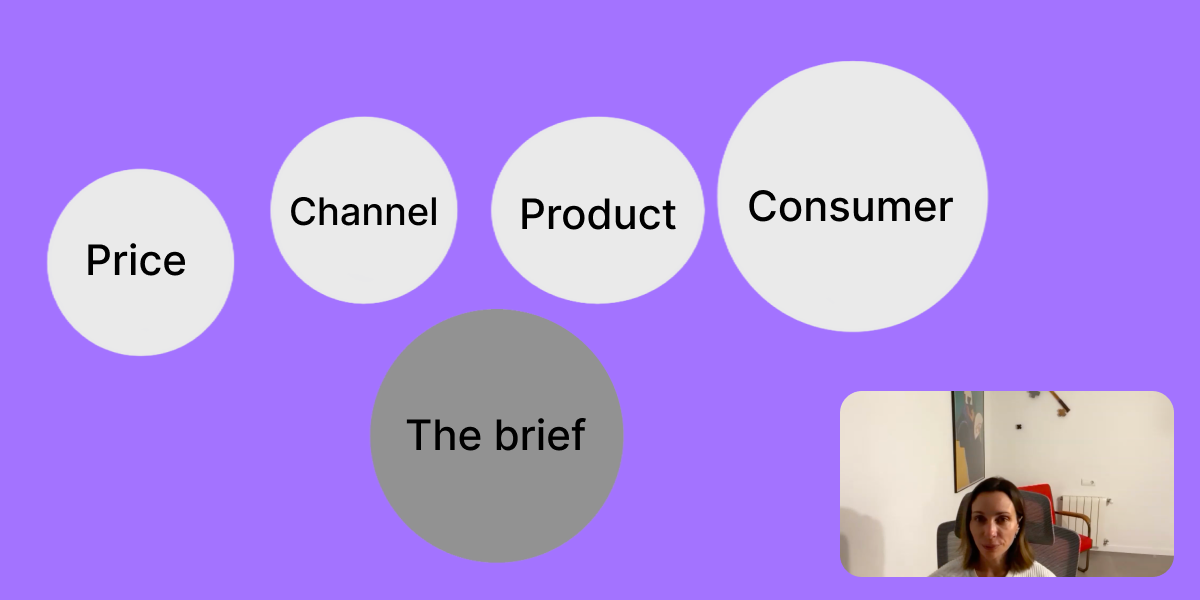
You’ve spoken to the client, taken notes and gathered a lot of information. Now what?
You don’t need to turn every answer into a page in the final document. You need to find the common thread running through the project.
Start by summarising three things:
The problem. What does the brand really need to solve?
The objective. What should the proposal achieve?
The creative direction. What approach could connect that problem with a visual solution?
Imagine a cosmetics brand that wants to refresh its identity because it feels too similar to other companies in the sector.
During the briefing, you discover that its main point of difference lies in the transparency of its ingredients and the traceability of its products. Its audience values clear information and distrusts overly promotional messaging.
With this information, you can start building a creative direction. Perhaps you explore a graphic system based on clarity, a typographic hierarchy that gives prominence to information, or photography that showcases the product without embellishment.
It doesn’t mean this is the only possible solution. It means you now have a set of criteria to guide your exploration.
This is where the usual tools of the creative process come into play: visual research, moodboards, editorial references, typeface testing, sketches and initial compositions.
A moodboard can help you explore an atmosphere. A selection of references can open up new possibilities. A sketch can help you test an idea before developing it further.
But none of these tools replaces the strategy you’ve defined beforehand.
A reference isn’t the solution. It’s a starting point for thinking.
When preparing your presentation, try to ensure that every important decision has a clear rationale.
Why have you chosen that typographic direction? What does that colour palette contribute? How does the composition help communicate the message? How does the concept relate to the brand’s positioning?
You don’t need to justify every pixel. But you should be able to explain the decisions that define the project.
This also changes the way you present your work. Instead of showing three proposals and asking which one the client likes best, you can explain the approach behind each one and the problem it solves.
The conversation stops revolving exclusively around personal preferences and starts focusing on the possibilities offered by each solution.
Even with experience, certain situations keep coming up. The good news is that many of them can be avoided with a timely conversation.
Starting to design because “the idea is clear enough”
The client has explained the brief, you have a few references and everything seems clear. So you get started.
But understanding what you’ve been asked to do is one thing; understanding why they need it is another.
If you have doubts, resolve them before investing hours in developing a proposal. One timely question can save you an entire afternoon of work.
Turning Pinterest into the project strategy
Visual references are useful. They help us communicate feelings, identify graphic codes and explore possibilities.
The problem arises when the meeting becomes a selection of attractive images without discussing what they need to contribute to the project.
When the client says, “I want something like this”, ask what exactly appeals to them about that reference. Perhaps it’s the composition, personality, tone or use of typography.
Understanding this will allow you to go beyond imitation.
Accepting “I want it to look more modern” without asking what that means
Modern can mean many things: a cleaner composition, a different typeface, a more intuitive digital experience or a change in positioning.
Before interpreting the word yourself, try to discover what perception the client wants to change and why.
Presenting proposals without revisiting the objective
Sometimes, during revisions, the project starts to drift. New ideas are added, new preferences emerge, and you end up making decisions that no longer address the original brief.
Returning to the brief doesn’t mean being rigid. It means remembering what you were trying to solve and assessing whether the changes genuinely improve the proposal.
Thinking that defending a decision means arguing with the client
Standing by your work doesn’t mean imposing your judgement or proving that you’re right.
It means explaining why you made a decision, listening to objections and considering whether there’s a better way to solve the problem.
The client knows their business. You bring a creative and professional perspective. The conversation works when both perspectives are taken into account.
You don’t need to change your entire working methodology. Sometimes, improving your briefing process starts with introducing small habits.
1. Listen a little longer before making suggestions. Don’t rush to prove that you already have an idea. Let the client explain the context and use questions to dig deeper.
2. Learn to spot contradictions. If the client wants to stand out but all their references are practically identical, that opens up an interesting conversation. You don’t need to resolve it immediately, but you should bring it up.
3. Separate what they ask for from what they need. The initial request is important, but it doesn’t always define the entire challenge. Investigate before assuming the solution is clear.
4. Write a summary you can refer back to. Summarise the problem, objectives, audience and agreed direction. It will serve as a reference throughout development and revisions.
5. Use feedback to understand, not just to make corrections. When the client says something isn’t working, ask what concerns them. Sometimes, behind a visual objection lies a problem with the message, tone or positioning.
These skills develop through practice, research and experience. They are also part of learning disciplines such as graphic design, art direction and branding.
At LABASAD, you can explore different online master’s programmes in design and creative disciplines to deepen your expertise, broaden your perspective and continue developing your own professional judgement.
What should a design brief include?
At a minimum, it should cover the brand’s context, the problem to be solved, the objectives, the audience, the message, relevant references, deliverables, budget, deadlines and the people responsible for approving the work.
What is the difference between a brief and a moodboard?
The brief explains what the project needs and what it should achieve. The moodboard explores visual references and helps communicate a possible aesthetic or conceptual direction. Both are part of the process, but they serve different purposes.
Who should prepare the brief?
The client provides information about their business and needs. The creative professional is responsible for asking the right questions, identifying missing information and organising the answers to define a working direction. What matters is that both parties participate.
What should you do if the client doesn’t know exactly what they want?
This is more common than it might seem. Instead of asking them to define a visual solution, help them explain the problem they’re facing, what they want to change and what they hope to achieve. You can use references to explore possibilities without turning them into a definitive answer too soon.
Can the brief change during the project?
Of course. Research, testing and conversations can reveal new information. If the objective or scope changes, it’s worth reviewing the decisions already made and agreeing on how the change affects the schedule, budget and deliverables.
In design, the winning idea isn’t always the most striking one or the proposal that looks best in a presentation. Often, the difference lies in understanding something that others have overlooked.
A good brief gives you room to investigate, question and explore. It helps you stop designing based on assumptions and start building proposals with a clear rationale behind them.
The next time a client asks you to make something “more modern”, don’t stop at the word itself. Ask what they want to change, what they need to communicate and what their brand is missing. The answer might not give you the solution straight away, but it could lead you to a much better idea.
And if you want to continue developing your visual judgement, explore new possibilities and learn how to turn ideas into distinctive graphic solutions, discover the Online Master in Graphic Design and the Online Master in Advanced Graphic Design. Because design isn’t just about making something look good, but about knowing what you want to communicate and why.